Sunrise at Angkor Wat: Cambodia's Ancient Wonder Awakens
Angkor Wat appears in thousands of travel photos, yet nothing—absolutely nothing—prepares you for the first time you witness the sunrise over these ancient temples. When the alarm went off at 4:30 AM, I questioned every life decision that led me to wake up before dawn in sweltering humidity. Two hours later, I understood why millions have made this same sacrifice.
The Pre-Dawn Journey
Our tuk-tuk driver, Mr. Sokha, picked us up from the hotel in darkness. The streets of Siem Reap were nearly empty, save for other determined sunrise chasers. We stopped at a local coffee stand—weak but welcome—and continued toward the temples.
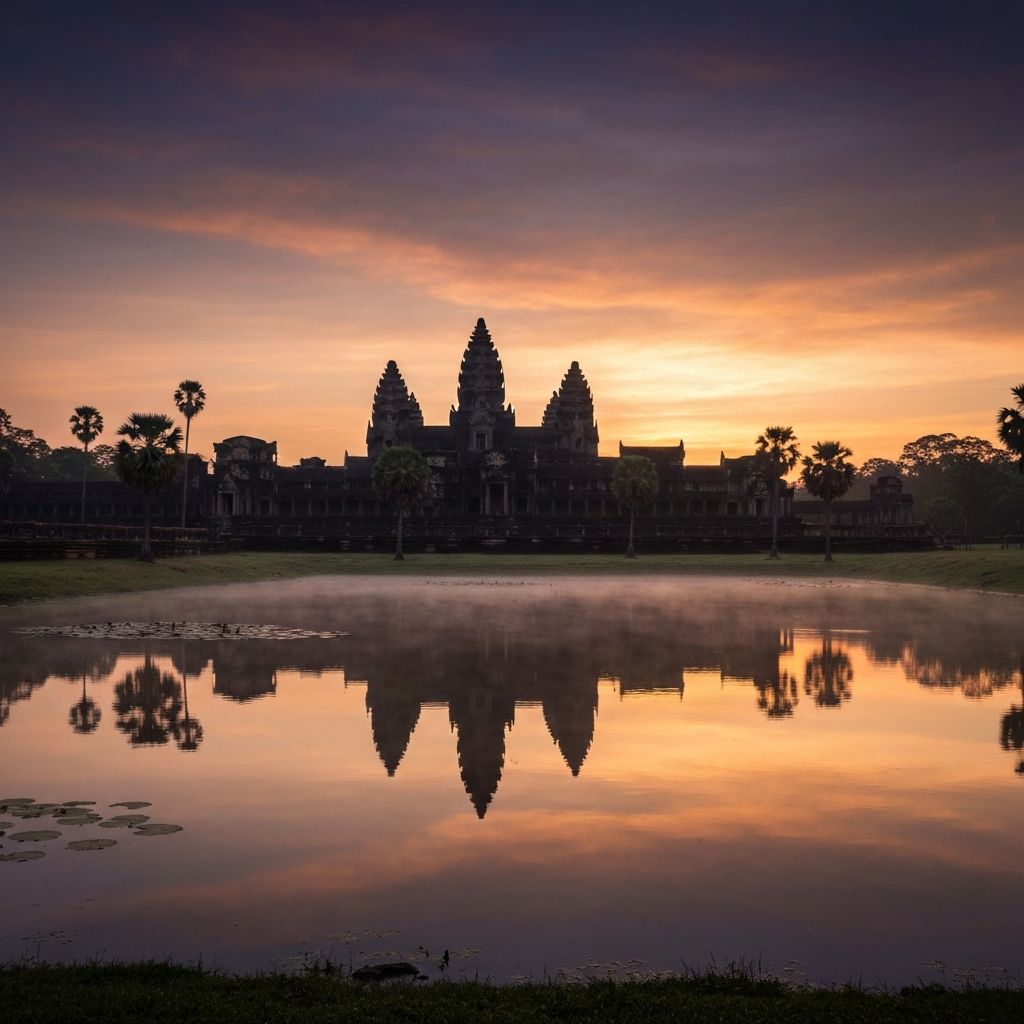
The entrance to Angkor Archaeological Park was already bustling. Hundreds of tourists, tour groups, and photographers converged with the same goal: find the perfect vantage point. We followed Mr. Sokha's lead, parking near a reflecting pool about a kilometer from the main temple.
The Waiting Game
Sunrise in Southeast Asia isn't a sudden event—it's a gradual transformation. For 45 minutes, we waited in pre-dawn darkness, watching the sky slowly shift from black to deep blue to purple to pink. Around us, travelers stood in complete silence, cameras ready.
Then, imperceptibly at first, the temple silhouette began to emerge. The three central towers of Angkor Wat transformed from black shapes into distinct architectural features. The colors changed by the minute—first orange, then gold, then brilliant yellows and reds reflecting off the moat.
That Moment
There's a specific instant when the sun breaches the horizon and light floods across the temples. Tourists gasped audibly. Some cried. I just stood there, phone camera forgotten, trying to imprint the moment into memory.
The ruins, which represent over 900 years of history, suddenly felt alive. The intricate stone carvings, invisible in darkness, revealed themselves. The scale of the construction—Angkor Wat remains the world's largest religious monument—became apparent in the golden light.
Beyond the Sunrise
Most tourists leave immediately after sunrise, which felt like missing the entire story. We stayed, exploring the temple complex as the morning progressed. The three concentric rectangular galleries contain thousands of stone reliefs depicting Hindu mythology. Each wall tells a story of ancient Khmer civilization, warfare, daily life, and spiritual beliefs.
What struck me most was the evidence of human effort. These stones were cut, shaped, and positioned with precision using ancient tools. The entire complex was built without modern machinery, representing centuries of devotion and engineering.
Practical Magic
Sunrise at Angkor Wat is genuinely magical, but it requires planning. Arrive at your vantage point by 5:30 AM at the latest. Bring water, insect repellent, and something to sit on—the ground is often damp. Hire a respectful guide who knows the temples' history; the architecture becomes far more meaningful with context.
The sunrise at Angkor Wat isn't just a checklist item. It's a humbling reminder of human potential, ancient wisdom, and the enduring beauty of works created with intention and passion.
David Thompson
Travel enthusiast and cultural storyteller exploring the hidden gems and authentic flavors of Southeast Asia.